Coding for Biology
Foundational programming on biological data: strings, counting, complements and comparisons.
Sharpen your skills with 52 bioinformatics coding problems in Python and R. Learn the fundamentals, build real skills, and go beyond the textbook.
See how it works ↓Move from programming fundamentals to computational methods.
Foundational programming on biological data: strings, counting, complements and comparisons.
Applied sequence analysis: motifs, restriction sites, translation, k-mers and assembly.
Algorithms and models: dynamic-programming alignment, phylogenetics and hidden Markov models.
Progress through curated problems: Foundational (nucleotide counts), Intermediate (k-mers, RNA splicing) and Advanced (affine gap alignment, Viterbi HMMs).
Write Python or R in the Monaco editor and run it in your browser against a real judge backend.
Every submission is validated against hidden test cases, including edge cases, homopolymers and length limits.
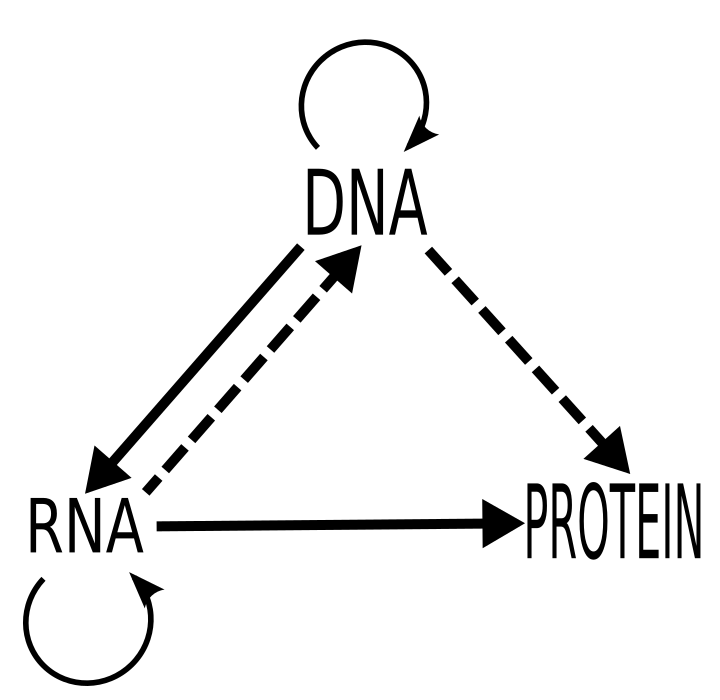
In molecular biology, the central dogma is the flow of genetic information: DNA → RNA → Protein, the principle that governs how life stores, transmits and expresses its code. CtrlDogma lets you control that flow — digitally.
It is the platform to practice bioinformatics algorithms, computational biology and biological data science, in a browser-based Python & R IDE.
Treat a sequence as data: the foundations.
Transform sequences and find the patterns in them.
Go beyond the textbook with real algorithms.